%20--%3e%3ccircle%20cx='32'%20cy='32'%20r='21.5'%20fill='none'%20stroke='%23F4F4F5'%20stroke-width='1.2'%20stroke-dasharray='2.8%204.2'%20stroke-linecap='round'%20opacity='0.42'/%3e%3cline%20x1='39.8'%20y1='27.5'%20x2='46.7'%20y2='23.5'%20stroke='%23F4F4F5'%20stroke-width='4'%20stroke-linecap='round'/%3e%3cline%20x1='39.8'%20y1='36.5'%20x2='47.1'%20y2='40.8'%20stroke='%23F4F4F5'%20stroke-width='4'%20stroke-linecap='round'/%3e%3cline%20x1='27.5'%20y1='39.8'%20x2='23.3'%20y2='47.2'%20stroke='%23F4F4F5'%20stroke-width='4'%20stroke-linecap='round'/%3e%3cline%20x1='24.2'%20y1='27.5'%20x2='16.4'%20y2='23'%20stroke='%23F4F4F5'%20stroke-width='4'%20stroke-linecap='round'/%3e%3ccircle%20cx='32'%20cy='32'%20r='9'%20fill='%23F4F4F5'/%3e%3ccircle%20cx='51'%20cy='21'%20r='5.2'%20fill='%23F4F4F5'/%3e%3ccircle%20cx='51'%20cy='43'%20r='4.6'%20fill='%23F4F4F5'/%3e%3ccircle%20cx='21'%20cy='51'%20r='4.6'%20fill='%23F4F4F5'/%3e%3ccircle%20cx='13'%20cy='21'%20r='4'%20fill='%23F4F4F5'/%3e%3c/svg%3e)
Mobile apps,
engineered to ship.
We build Android (Kotlin, Jetpack Compose), iOS (Swift, SwiftUI), and cross-platform apps with Flutter or React Native — plus the APIs, auth, and store releases those clients need in the real world.
| Assumed entry | From ~USD $2,500Typical discovery and first scoped slice; dual-platform programs quoted after brief. |
|---|---|
| Founded | 2024 |
| Shipped shapes | 150+ |
| Engagement | Fixed-scope · Retainer |
| Typical slice | 2–8 wks |
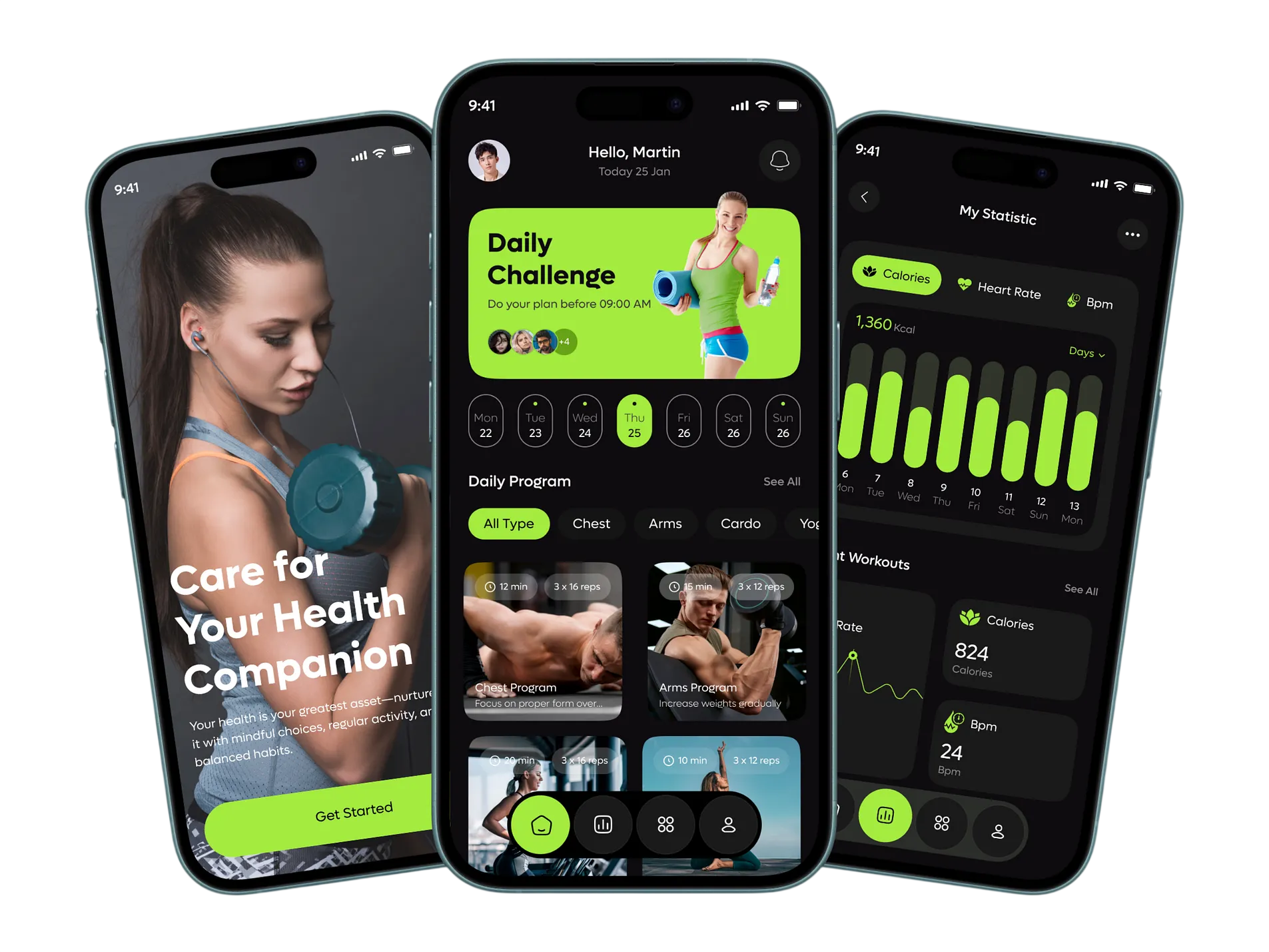
Six ways we help you ship mobile
Native Android
Production Android in Kotlin with Jetpack Compose (or mature View-based codebases), Play Console pipelines, ProGuard rules, and billing where you need it.
- Internal & Play tracks
- Background work & notifications
- Material 3 UX
Native iOS
iPhone and iPad apps in Swift and SwiftUI: Apple Sign-In, push, subscriptions, and TestFlight before App Store review — aligned with your Apple developer accounts.
- TestFlight & App Store listings
- StoreKit flows
- Privacy labels documented
Flutter
One Dart codebase for iOS and Android when pixel-consistent UI and fast iteration matter — with platform channels only where the OS demands it.
- iOS + Android from one repo
- Offline-first patterns
- Dev & release tooling
React Native
Cross-platform apps sharing TypeScript with your web team — Expo when it fits, native modules when you outgrow the defaults.
- OTA-friendly workflows when scoped
- Native bridges for SDK gaps
- Shared design tokens
APIs for mobile products
Backends mobile clients rely on: auth-aware REST or GraphQL, versioning, idempotent webhooks, and logs you can trace when a build fails in the field.
- Mobile-friendly payloads
- Push & device registration
- Rate limits & backoff
Ship, stabilize, extend
Store submissions, phased rollouts, crash and ANR triage, dependency bumps, and small feature lanes after v1 — so your app does not rot after launch week.
- Release trains
- Monitoring hooks
- Retainer-friendly backlog
Phases stores and users actually see
Discovery & scope
Personas, platforms (iOS/Android/both), offline needs, and store constraints — you get a written plan with assumed fees before we commit to a long build.
UX & vertical slice
Figma flows and a thin build on real devices so stakeholders feel latency, navigation, and auth — not slides.
Product build
Sprint demos from device installs, feature flags, and staging tracks; depth scales with integrations and compliance.
QA & store prep
Device matrix, accessibility baselines, screenshots and listing copy — then Play and App Store submissions on your accounts.
Launch
Phased rollout, crash dashboards, analytics sanity checks, and a short warranty window.
Roadmap & care
Retainers for upgrades and incidents, or a documented handoff for your in-house team.
Tools we ship in production
Apps in real industries
What we mean by shipping
Releases you can install
Demos ship to TestFlight, Play internal tracks, or staging builds — the same paths your users will eventually take.
AI-accelerated delivery
We use modern AI-assisted development for speed on boilerplate; architects still own security, performance, and store policy.
Mobile + API in one thread
Screens, endpoints, and integrations stay aligned — fewer ‘works on my machine’ handoffs between vendors.
Security-minded defaults
Token storage, cert pinning when warranted, and minimal data on device — discussed before you scale downloads.
Choices buyers ask about on day one
Fully native vs Flutter / React Native?
Swift + Kotlin win when you lean on cutting-edge OS features, heavy media on-device, or long-lived platform-specific code. Flutter and React Native win when one team must ship both stores and most screens are business logic, lists, and API-driven layouts.
Our take: Default to cross-platform when timelines and budget are tight; split native only when the feature list forces it.
React Native vs Flutter?
React Native fits teams already strong in TypeScript and React. Flutter fits when you want one opinionated UI engine, strong offline rendering, and Dart end-to-end.
Our take: RN when you share people with web; Flutter when mobile is the center of gravity and you want fewer layout surprises across devices.
Ship iOS first or Android first?
Market choice: regions, payment methods, and review friction differ. Technical choice: which SDKs, testers, and hardware you already have.
Our take: Lead with the platform your paying users are already on; parallelize only when budget matches two store pipelines.
Build in-house or with a studio?
In-house works when you can hire senior mobile, design, and release engineers inside a quarter. A studio works when you need all three skill sets next month.
Our take: Studios for speed and coordinated releases; in-house when the app is decade-long core IP.
Terms we use on mobile projects
Native mobile development
Apps built with each platform’s primary tooling — Kotlin and Jetpack Compose on Android, Swift and SwiftUI on iOS — with full access to OS APIs and store distribution.
Cross-platform (Flutter / React Native)
One shared codebase producing binaries for both stores, with native modules or plugins only where the framework boundary ends.
App Store & Play Console
Apple and Google developer programs used to distribute betas, manage signing, and publish listing metadata reviewers see.
Minimum viable product (MVP)
The smallest mobile release that proves retention or revenue with real installs — still includes analytics, auth if needed, and a post-launch fix path.
Before you sign
What shipping looks like
Tell us what you are building for iOS and Android — we reply with stack, milestones, and cost options.
Start from Android, Flutter, or React Native — or go straight to contact if you need native iOS and a single proposal across both stores.