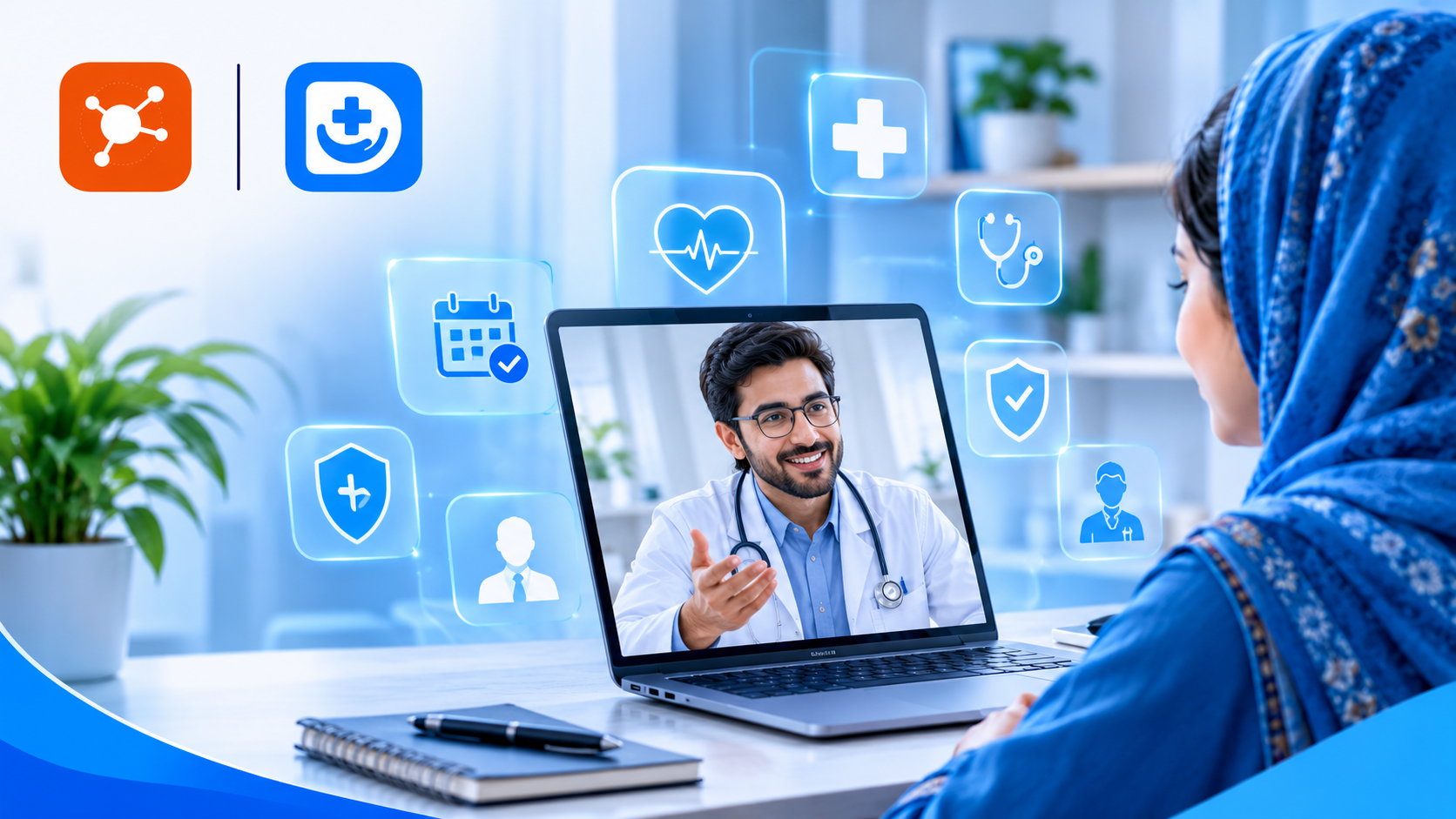
Technology · Blog
The Future of Digital Healthcare: How Telemedicine Is Connecting Doctors and Patients
Healthcare is one of the most important parts of everyday life, yet accessing medical services is not always easy. Long distances, busy schedules, limited availability of specialists, and difficulties arranging appointments can prevent people from receiving timely medical attention.
For many patients, visiting a healthcare facility involves travel, waiting, and additional expenses. For doctors, managing appointments, communicating with patients, and organizing consultations can also be challenging.
Technology is creating new opportunities to address these problems.
Through telemedicine, online consultations, digital appointment systems, and healthcare applications, patients and doctors can connect through digital platforms. These developments are transforming how people discover healthcare services, communicate with medical professionals, and manage their healthcare journeys.
This growing transformation is known as digital healthcare.
At BalochDev, we believe technology should solve real-world problems and make essential services more accessible. This vision is reflected in Darman, a digital healthcare platform designed to help connect doctors and patients through convenient online healthcare services.
1. What Is Digital Healthcare?
Digital healthcare refers to the use of digital technologies to support healthcare services, communication, information management, and patient experiences.
It includes a wide range of technologies, such as:
Telemedicine and online consultations.
Digital doctor profiles and healthcare directories.
Online appointment booking systems.
Electronic health information and medical records.
Healthcare applications for patients and professionals.
Digital health education and wellness resources.
These technologies help connect different parts of the healthcare experience.
Instead of depending entirely on traditional in-person processes, patients can use digital platforms to discover healthcare professionals, arrange appointments, and access certain healthcare services remotely.
Digital healthcare does not mean that every medical problem can be treated online. Physical examinations, laboratory tests, emergency treatment, and other clinical procedures may still require in-person care.
The purpose is to make appropriate healthcare services more accessible through technology.
2. Telemedicine: Connecting Doctors and Patients Online
One of the most important developments in digital healthcare is telemedicine.
Telemedicine allows patients to communicate with healthcare professionals remotely using digital communication technologies.
Depending on the service and the patient's medical needs, consultations may take place through video calls, audio calls, or other supported communication methods.
For patients, this can offer several advantages.
Convenience: Patients may be able to consult a doctor without travelling to a healthcare facility.
Accessibility: People living far from medical facilities may find it easier to connect with healthcare professionals.
Time efficiency: Online consultations can reduce travel and waiting time when remote care is appropriate.
Continuity of care: Follow-up discussions may become more convenient for patients and doctors.
For doctors, telemedicine can provide another way to communicate with patients and organize consultations.
However, online consultations are not suitable for every condition. Serious symptoms, emergencies, and conditions requiring physical examination need appropriate in-person medical attention.
3. Doctor Profiles: Helping Patients Find the Right Healthcare Professional
Choosing a healthcare professional is an important decision.
Patients often want to understand a doctor's qualifications, medical specialty, experience, and available services before arranging a consultation.
Digital healthcare platforms can simplify this process through doctor profiles.
A well-organized doctor profile may provide information such as:
Doctor's name and professional introduction.
Medical specialty.
Qualifications and experience.
Available consultation services.
Appointment availability.
Relevant professional information.
Having this information in one place can help patients understand their options and make more informed decisions when choosing a healthcare professional.
For doctors, digital profiles provide an opportunity to present their professional information and make their services easier for patients to discover.
A transparent and informative profile system can help build trust between healthcare professionals and the people seeking their services.
4. Online Appointment Booking: Making Healthcare More Convenient
Arranging a medical appointment can sometimes be frustrating.
Patients may need to contact clinics, ask about available timings, wait for confirmation, or visit a facility simply to schedule a consultation.
Digital appointment booking systems offer a more convenient alternative.
Through an online platform, patients can explore available doctors, review relevant information, and request or book appointments according to the platform's supported booking process.
A digital appointment experience can help:
Reduce unnecessary appointment-related communication.
Make doctor availability easier to explore.
Help patients organize their healthcare schedules.
Improve appointment management.
Make healthcare services easier to access.
For healthcare professionals, digital appointment management can also help organize patient consultations and reduce administrative difficulties.
The goal is to make the process of connecting with a doctor simpler for everyone involved.
5. Digital Healthcare Accessibility: Why It Matters
Access to healthcare remains a challenge in many communities.
People living in remote areas may have limited access to specialists. Busy professionals may struggle to find time for appointments. Elderly patients and people with mobility limitations may experience additional difficulties travelling to healthcare facilities.
Digital healthcare solutions can help reduce some of these barriers.
By connecting patients and healthcare professionals through digital platforms, telemedicine can create additional opportunities to access medical advice and appropriate healthcare services.
Digital healthcare can be especially valuable for:
People in Remote Communities: Online consultations may help patients connect with healthcare professionals who are not available nearby.
Busy Professionals: Digital appointment options can make it easier to organize consultations around daily responsibilities.
Families: Healthcare applications can help users discover doctors and manage appointment-related activities.
People Seeking Follow-Up Advice: When clinically appropriate, remote consultations can make follow-up communication more convenient.
However, accessibility also depends on internet connectivity, digital literacy, language support, affordability, and the availability of qualified healthcare professionals.
Technology alone cannot solve every healthcare access problem, but it can become an important part of the solution.
6. Darman: Bringing Doctors and Patients Together Through Technology
At BalochDev, we believe digital innovation should have a meaningful purpose.
That belief is reflected in Darman, a digital healthcare platform designed to bring doctors and patients closer through technology.
Darman focuses on creating a more convenient digital environment where healthcare professionals and patients can connect and access useful healthcare services.
The platform includes several healthcare-focused capabilities.
Doctor and Patient Profiles
Darman provides profile-based experiences for doctors and patients, helping users participate in a connected digital healthcare environment.
Doctor profiles can help patients explore healthcare professionals and their available services.
Online Consultations
Darman aims to make remote communication between doctors and patients more accessible through online consultation services.
This provides another way for patients to connect with healthcare professionals when remote consultation is appropriate.
Appointment Booking
Finding and arranging appointments is an important part of healthcare access.
Darman brings appointment-related services into a digital environment, helping users connect with healthcare professionals more conveniently.
Healthcare and Wellness Information
Healthcare involves more than medical appointments.
People also need information and guidance related to everyday health and wellness.
Darman focuses on healthcare-related resources that include areas such as:
General healthcare information.
Diet and nutrition guidance.
Skin care information.
Hair care information.
Other health and wellness topics.
These resources can help users explore healthcare-related information and develop greater awareness of everyday wellness.
Health information should support, not replace, professional medical advice and diagnosis.
Explore Darman on Google Play:
https://play.google.com/store/apps/details?id=com.user.darman
7. The Role of Technology in the Future of Healthcare
Digital healthcare is still evolving, and several technologies may shape its future.
Artificial Intelligence in Healthcare
AI may support healthcare professionals through administrative assistance, information organization, and certain clinical support applications. Medical decisions must remain under appropriate professional oversight.
Connected Healthcare Experiences
Future platforms may connect appointment management, consultations, healthcare information, and other services into more integrated digital experiences.
Remote Healthcare Access
Improvements in internet connectivity and communication technologies may create additional opportunities for remote healthcare services.
Personalized Digital Experiences
Healthcare applications may increasingly provide experiences tailored to users' needs, preferences, and healthcare journeys while respecting privacy and data protection.
Improved Accessibility
More user-friendly applications, multilingual experiences, and accessible interfaces may help more people benefit from digital healthcare services.
The future of healthcare will likely combine traditional medical expertise with digital innovation rather than replace one with the other.
8. Challenges and Responsibilities in Digital Healthcare
Although digital healthcare offers many opportunities, it also comes with important responsibilities.
Healthcare information is sensitive, and platforms must take privacy and data security seriously.
Reliable digital healthcare services should consider:
Protection of personal and medical information.
Secure user authentication and access controls.
Clear communication about healthcare services.
Responsible handling of patient information.
Reliable communication and appointment systems.
Appropriate involvement of qualified healthcare professionals.
There are also limitations to remote healthcare. Some conditions require physical examinations, diagnostic tests, or immediate medical attention.
Successful digital healthcare solutions must recognize these limitations and guide users toward appropriate care.
Technology should support healthcare professionals and patients while maintaining safety, trust, and responsibility.
9. Building Technology That Makes a Difference
At BalochDev, we see software development as an opportunity to address meaningful challenges.
Our work explores how technology and artificial intelligence can support different areas of everyday life, from creative tools and digital productivity to language technology and healthcare.
Darman represents our interest in making healthcare services more accessible through digital innovation.
We believe useful healthcare technology should focus on people, simplify common processes, and help connect individuals with the services they need.
The objective is not simply to build another application. It is to explore how digital solutions can contribute to a more connected and accessible healthcare experience.
Conclusion: A More Connected Future for Healthcare
The future of healthcare is increasingly digital.
Telemedicine, online consultations, doctor profiles, appointment booking, and healthcare applications are changing how patients discover and access medical services.
Digital healthcare solutions can reduce certain barriers, improve convenience, and create additional ways for doctors and patients to communicate.
Through Darman, BalochDev is exploring this opportunity by bringing doctor and patient profiles, online consultation services, appointment-related features, and healthcare resources into a digital environment.
Technology cannot replace the knowledge, care, and judgment of qualified healthcare professionals. But when developed responsibly, it can help make healthcare more connected and accessible.
Explore Darman on Google Play:
https://play.google.com/store/apps/details?id=com.user.darman
Discover BalochDev:
https://www.balochdev.com/
BalochDev — Building technology with purpose.